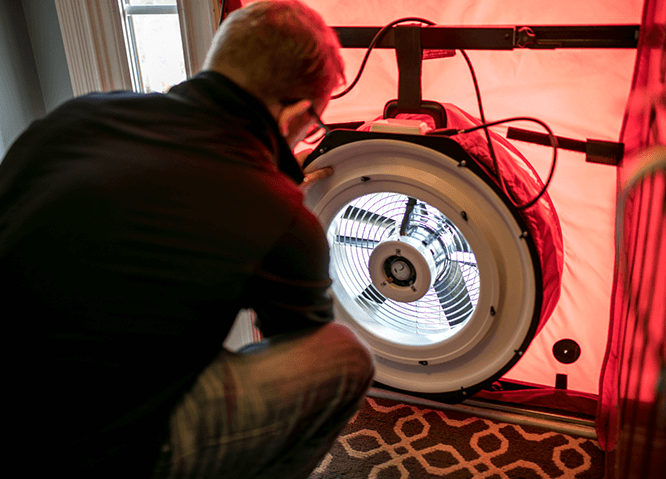
Testing the ducts requires sealing all the openings of a duct system. This includes all supply and return registers. We do this by using large HVAC tape to cover and seal the openings. This process can take some time as we try to create the best seal possible. Our fan is then sealed to the air handler or a large return opening.
The fan is run to depressurize the duct system to -25 pascals. The amount of air moving through our fan is then measured. The number generated under 25 pascals of pressure is known as CFM@25. This CFM number is the number used in the calculation.
Preparing for a Duct Leakage Test
After performing thousands of tests, we have come up with a list to help you easily past our test.
Ensure that your HVAC contractor is aware that the test will be occurring so they use an adequate amount of sealing product during their installation.
Flexible ducts tend to leak around the zip ties. Minimizing these junctions, especially in attics, can be very helpful.
Use extra “pookie” around the edges of chase boxes and corners.
Heavily seal around the air handler. We commonly see poorly sealed ducts around the back of the furnace.
Have an airtight system for the filter slot. Have some type of weather-stripped door that will make a tight seal when the door is closed.
Plan to do the test during the rough-in so any problem areas can still be accessed.